Specialty coffee has moved from niche to mainstream in European and Gulf retail markets. Premium supermarket chains, hotel groups, and specialist retailers are actively seeking specialty-grade private label coffee — their own brand on high-quality single-origin product — to compete with established specialty brands at better margin. For wholesale distributors evaluating specialty private label production from European manufacturers, this guide covers the key decisions and criteria.
What Qualifies as Specialty Coffee at Wholesale
The Specialty Coffee Association (SCA) defines specialty coffee as green coffee scoring 80 points or above on a 100-point cupping scale conducted by a certified Q Grader. In practice, this means traceable single-origin arabica from specific farms, cooperatives, or defined growing regions — with documented flavour profiles and cupping notes.
For wholesale buyers, the most commercially relevant aspect of specialty grading is traceability — the ability to state origin, altitude, processing method, and harvest season on retail packaging. This is what commands the premium retail price point and differentiates specialty private label from commodity private label.
Specialty Private Label vs Commercial Private Label
The key difference for distributors between specialty and commercial private label is the positioning and margin structure. Commercial private label (blended arabica-robusta, commodity origin) competes on price and volume. Specialty private label (single origin, SCA-graded, traceable) competes on quality story and retail price point — commanding 40–80% higher retail prices than commercial ranges.
For distributors supplying premium retail channels, specialty private label is increasingly the growth category — consumer willingness to pay for origin transparency has expanded significantly across European and Gulf markets in the last five years.
Most Demanded Specialty Origins at Wholesale
The four most consistently demanded specialty origins at wholesale scale in Europe and the Gulf are: Ethiopia Yirgacheffe (floral, bergamot, bright acidity — the global benchmark for light roast specialty), Colombian single-farm arabica (caramel, red fruit, balanced body), Kenyan AA (blackcurrant, tomato, wine-like complexity), and Yemen Mocha (chocolate, spice, earthy — particularly strong in Gulf markets where Yemeni coffee carries strong cultural premium).
Roast Profiles for Specialty Wholesale
Specialty coffee at retail is predominantly sold in light and medium roast profiles — these preserve the origin-specific flavour characteristics that justify the premium price point. Dark roast specialty is a smaller market segment, used primarily for espresso-format specialty products. Burdet Coffee produces specialty roasts across all three profiles to buyer specification.
Packaging for Specialty Wholesale
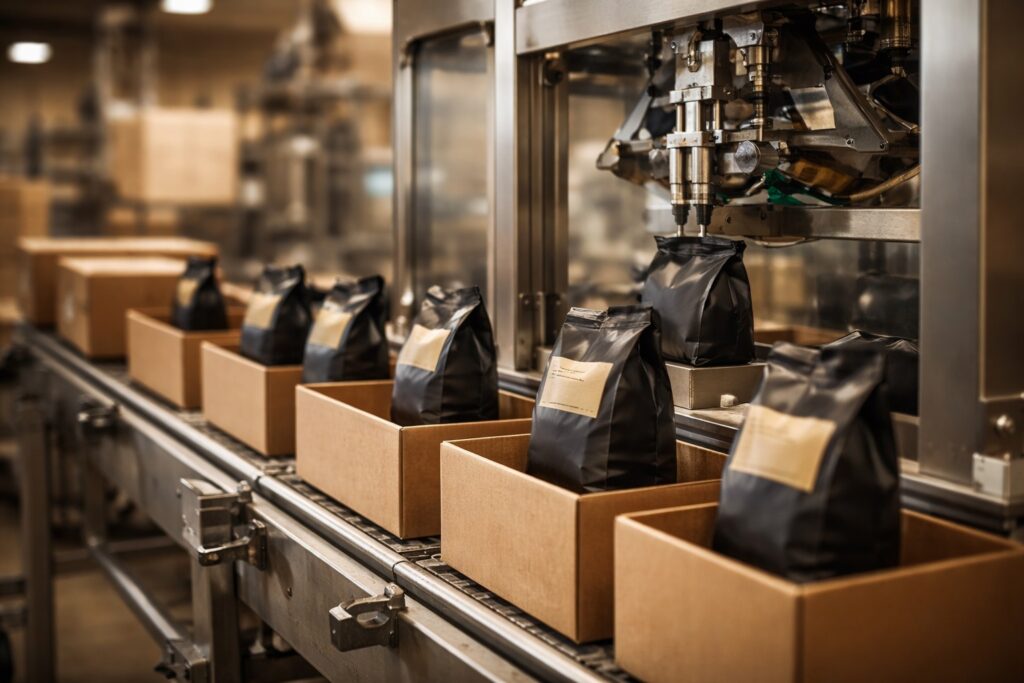
Specialty private label packaging needs to communicate origin story at retail shelf level. This means flat bottom bags (premium visual format), full-surface print area for origin narrative and cupping notes, degassing valve (essential for freshly roasted specialty), and kraft paper or premium barrier film options. All of these formats are available through Burdet Coffee’s production facility on pallet orders from 500 kg.
Burdet Coffee Specialty Range
Burdet Coffee produces specialty-grade single-origin coffee under private label for wholesale distributors and retailers. Our Gourmet single-origin line is available in Ethiopian, Colombian, and other traceable origins depending on seasonal availability. All specialty production is available in whole bean, ground, and capsule formats — full pallet orders from 500 kg, sea freight worldwide.
How Retailers and Distributors Position Specialty Private Label
The most successful specialty private label ranges position on three elements: origin transparency (specific country, region, farm or cooperative), process narrative (washed, natural, honey-processed), and flavour promise (cupping notes on packaging). Retail price points for specialty private label in European supermarkets typically range from 18–35 euros per kilogram — significantly above commodity private label ranges.
FAQ
What specialty coffee origins are available for private label wholesale from Europe?
Burdet Coffee works with specialty-grade Ethiopian, Colombian, and other traceable single-origin coffees for private label wholesale production. Contact us to discuss origin availability, cupping notes, and volume pricing for your specific market.
What is the wholesale minimum for specialty coffee private label from a European factory?
At Burdet Coffee, specialty private label wholesale orders start from 500 kg per pallet, sea freight. Full container orders are available for distributors supplying multiple retail accounts or territories.
Why do retailers choose European-manufactured specialty private label over sourcing direct?
European manufacturing provides IFS-certified processing, retail-compliant packaging, export documentation, and quality consistency — all critical for supermarket and specialty retailer approval. The total logistics and compliance cost of direct sourcing at scale often exceeds the factory margin advantage.